Showing posts with label Guest Review. Show all posts

Tuesday, April 12, 2011

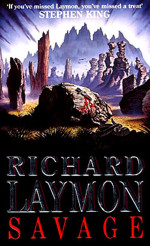
Laymon Month: Savage reviewed by Lincoln Crisler


I'm not the most well-versed Laymon fan (arguably a detriment to one pursuing a professional career in horror), but I have read enough to have a healthy respect for the man and his body of work. Absolutely, without question, I've read enough Laymon to buy more of his books, sight unseen, without so much as a friendly recommendation, until hopefully I've read them all at least once. More than any Laymon I've read, this attitude is shaped by Savage.

Savage, as described as simply as possible, is about a fifteen year-old boy who follows Jack the Ripper from the streets of Whitechapel, England to the dusty American southwest, first as a captive and later to bring the murderer to justice. To be more accurate, however, it's a long, involved story that's epic in the way King and Straub's Talisman is epic; for some of the vageme reasons, even. Trevor Bentley begins his story as a boy and finishes as a man, or close to it, and his journey takes him roughly halfway across the world. He is both hindered and assisted in his efforts by a diverse group of people, including a couple of lovers. And there is killing, of the exciting, shocking, brutal and heart-wrenching varieties.


Any writer would be lucky to write one book this good in his or her lifetime. Laymon managed to not only write something completely different from his typical book, but do it while including the splatter and sex a Laymon fan expects. I must say that no other Laymon book I've read, no matter how excellent, comes close to knocking Savage off its perch, or even sitting beside it. But, like I said before, I have a lot more Laymon to read, so I'm open to suggestions.

And if you've yet to read Savage yourself, you can fix that right now.

Lincoln Crisler's debut novella, WILD, was released in March from Damnation Books. He has also authored a pair of short story collections, Magick & Misery (2009, Black Bed Sheet) and Despairs & Delights (2008, Arctic Wolf). A United States Army combat veteran and non-commissioned officer, Lincoln lives in Augusta, Georgia with his wife and two of his three children. You can visit his website at www.lincolncrisler.info.

Monday, April 11, 2011

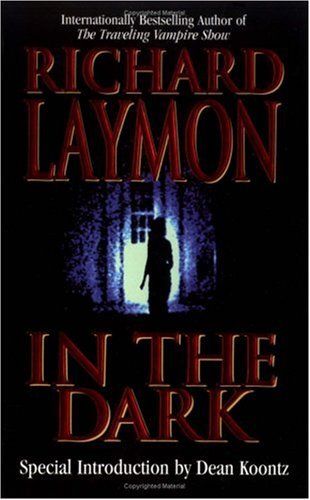
Laymon Month: In The Dark reviewed by Meli

If you haunt any sort of literary sites on the internet then you probably know Meli.  Her unbridled enthusiasm regarding genre fiction is unmatched! She inspires me to read more and more and more!  I am ecstatic to have her share her first real "Laymon experience" with us here at Grade Z Horror.  After you read her wonderful review, head on over to Destroy The Brain and bask in her awesomeness!


In The Dark 
Richard Laymon
Headline Book Publishing (1994)

I am probably the newest fan of Richard Laymon among the contributors celebrating Grade Z Horror’s Laymon Month. I am also, most likely, the least familiar with his work. In fact, it is thanks to a few of these fine writers that I decided to give Laymon a read. I logon almost daily to talk horror fiction with a group of Grim Readers by way of the Rue Morgue Mortuary (the Rue Morgue Magazine message board) and it was there that I first heard the name Laymon. Before I joined the ranks of horror fiction obsessives, my horror reading was mostly dedicated to the classics, like H.P. Lovecraft, Poe, and E.T.A. Hoffman. I was a late bloomer, but luckily Colum of Paperback Horror, Capt Murdock, Dark Mark and other board members helped me familiarize myself with contemporary horror writers and revealed an entire library of sick and twisted fiction. These members would go weeks it seemed reading nothing but Laymon and I later discovered he inspired and influenced many of my newfound favorite authors.

Unlike Jeff Strand (see April 4th guest post), I had the convenience of the internet when I finally decided to give Laymon a turn. A couple clicks and my copy of The Cellar (1980) was on its way to my front door. A simple google search and brief skim of Wikipedia informed me that this was his first novel, so of course this would be a good place to start, right? It was sick and twisted, mixing real life horrors with the unimaginable. To quote In The Dark of which I am about to review, I felt “fear, revulsion, and an unexpected surge of desire” reading The Cellar. Unfortunately, there was one scene in the book that completely pulled me out of the story and I was left underwhelmed by my first Laymon outing.

I returned to my online cohorts with strong criticisms of Laymon’s The Cellar, particularly regarding the paper thin woman he cast as his lead. Looking back, I can’t say for sure why I was so quick to write off the novel. Maybe the scene was really ridiculous enough to ruin the entire story; perhaps my head wasn’t in it; or it’s possible I had specific expectations that inhibited my enjoyment. Whatever the case may be, to the credit of Grade Z Horror’s celebratory Laymon Month and the kindness of Colum at Paperback Horror for sending me a copy of In The Dark I gave Laymon another chance. If I continue to devour Laymon’s novels with the same amount of fervor as I did In The Dark, I will always remember this as the book that sparked my obsession.

When In the dark opens, we find Jane Kerry behind the circulation desk of the library where she works just as she discovers an envelope simply marked “JANE.” Inside she finds a letter with a cryptic message to “look homeward, angel,” signed only “Master of Games” accompanied by a crisp $50 bill. Upon solving the clue, she finds another letter promising further rewards for playing the game and a $100 bill. This simple hook drives the rest of the story in an unrelenting, and often brutal, treasure hunt of horrors. Once I started I couldn’t stop. I took the book everywhere I went. Any free moment was spent reading In The Dark.

In The Dark has all the best elements of a great horror film put to print gripping plotline, shocking twists, sweat-inducing tension, brazen nudity and sex – but has a sophisticated edge as well. The reader is equal parts participant and voyeur which allows Laymon to compel the reader to consider philosophical and moral issues. As Jane pushes her own moral boundaries the reader will wonder, how far he or she would be willing to go and for how much? As our Master of Games, or Mog as he / she is also known, continues to up the ante and Jane progresses further into these exploits you will ponder that age-old philosophical riddle. If a tree falls in a forest and no one is around to hear it, does it make a sound? Or in Jane’s case, if no one’s watching, is it really happening? Would it be more exciting if they were? Laymon cleverly coerces the reader into these theoretical quandaries without upsetting the flow of his fast-paced plot. I shifted naturally between being an active player – pondering what I would do in Jane’s situation – to being the spectator of this sadomasochistic game of puzzles. If no one’s watching me watching, am I really watching? Ah-ha! Clever, Laymon, very clever.

The less you know about how this sinister game unfolds, and to what extent, the better. Laymon’s novel is a successful representation of H.P. Lovecraft’s famous quote, “…the oldest and strongest kind of fear is fear of the unknown.” But Laymon doesn’t just play on his audiences’ worst fears; he also manipulates our dark sexual desires making this a phantasmagoric cocktail of fear and perversion. The reader may be shocked by their own reaction to developments in the story and, like Jane, find your terror mixed with an “unexpected surge of desire,” but, I’m sure that was Laymon’s intention.

You probably wouldn’t be reading this right now if you weren’t already a fan or at least curious, but just in case here is a fair warning: Laymon is not for the faint of heart or easily offended. His writing is often gory, graphic, and limitless in its brutality. If you are a fan of authors like Edward Lee, Jack Ketchum, Bryan Smith, and Jeff Strand, to name a few, Laymon is a must.

Perhaps it is premature to claim membership in the club of diehard Laymon fans with just two books under my belt, especially since I was lukewarm on the first, but I can admit with absolute certainty that In The Dark is just the beginning of my journey into the subversive world of this author. As this appreciation month proves, there is definitely no shortage of Laymon lit to keep me busy. With more than thirty novels and sixty short stories to his credit, I have plenty to whet my appetite for the strange and perverse and maybe even chew over some deep philosophical questions too!

Tuesday, April 5, 2011

Laymon Month: One Rainy Night reviewed by Paperback Horror

Colum over at Paperback Horror is the definitive voice when it comes to horror fiction. His reviews are edgey, intelligent and just as entertaining as the works he is reviewing. The man is one of the true treasures of our beloved genre so it is with great pleasure I give you the Paperback Horror review of Richard Laymon's One Rainy Night!

One Rainy Night
Richard Laymon
Headline Press (1991)


One Rainy Night is one-hundred percent balls-out brutal. From start to finish, this novel reads like a mass murdering psychopath’s wettest dream. The gore is non-stop, visceral, and completely unapologetic, and leaves the reader with absolutely no room to breathe. This is Laymon at his most violent and chaotic, of that you can be sure.


The water drops like a shroud on the town of Bixby. Warm, viscous and unnatural, it coats the inhabitants in an unending torrent - and turns them into crazy, hate-filled maniacs. A helpful stranger at a gas station shoves a petrol pump down a customer’s throat and squeezes the trigger. A soaking-wet queue of cinema-goers smashes it’s way inside the movie house to slice up the dry people within. A loving wife attacks her husband, bouncing the back of his head on the marble floor until it sounds like sloppy, wet meat...


In what is (in this reader’s opinion) quite possibly the most violent novel this man ever released, One Rainy Night treats the reader to something that they’ve rarely seen from this author: Absolute chaos. Every single bit of this story just screams of Laymon’s creative release. A literary blitzkrieg, if there was ever a term like that. There is barely any room to actually sit down and rip this piece apart for a review, and that’s primarily because Laymon seems to have designed this story around his willful abandoning of the trappings that this genre relies on. This is the most un-formulaic story in his repertoire. If you’re familiar with the comic book gross-out of Garth Ennis’ Crossed (Avatar Press ’08 - ’10), you’re going to be quite at home with the sheer amount of depravity and violence present in this book. Further more, if you enjoyed the aforementioned comic series, you’re going to love this.


The story starts off with the murder of a young black man, and quickly spirals into some of the most violent scenarios I have read yet. Nothing is sacred in this piece of writing, and nothing is left unmarred. One Rainy Night really does satisfy the bloodlust in Laymon’s readers, bathing almost every character first in a messy film of black rain, and then in a generous helping of blood. Think the apocalyptic imprisonment of a town in Brian Keene’s Darkness On The Edge Of Town mixed with the insanity of Ennis’ Crossed, and a generous helping of...well...tried and true Richard Laymon bluntness.

Speaking of which, Laymon is at his utmost peak with detail and description in One Rainy Night. I’ve spoken before about the brevity that this author uses when crafting sentences that set up a scene, and then again with his action sequences; well, this is the best example that will prove that observation. In this novel, Laymon tells you only what he wants you to see. He lays everything on the table, and believe me...it gets really messy.


One of the main characters - Trev - embodies the most classic male character found in Laymon’s stories. He’s headstrong but unsure, tough but vulnerable, and most importantly, figures things out right before it’s too late, but right after the shit hit’s the fan. It is an absolute treat to read this character get his ass handed to him, and the resulting twists and turns add a bloody cherry to the top of the sundae. In contrast, the lead female character - Maureen - is one of Laymon’s least believable woman-in-peril types. The trials and tribulations that she is put through are enough to put any normal person into a catatonic state. Maybe that’s the most enticing part of Laymon’s female leads though: their sheer refusal to lie down and take it. Regardless, the interlacing stories (and by that, I mean that they really do interlace intimately at some points) prove to be a blessing to the story line. Laymon’s insistence on brutalizing everyone that steps under his pen couldn’t have gone very far without the subtle nuances that he lets out with these two folks.


There is one more character in this novel that I want to point out, but I really don’t want to ruin him for you. We’ll leave it at this: His name is John, and he is the most likable and strong character I have read in a Laymon book. Period. End of story.


I’m not going to pretend that this is the best Laymon novel you will ever read. While Savage, Endless Night, The Cellar, and In The Dark exemplify this author’s best works (again, in my opinion), One Rainy Night will “get you there” on so many levels.


Packed with more violence and utter brutality than you could possibly expect from a book, One Rainy Night is a whirlwind ride through the mind of an insane genius, and the best example of what it means to be blown away by a master of his craft.


PBH.
Related Posts Plugin for WordPress, Blogger...